The Ultimate Grand Canyon River Trip Packing List, Tested Over 16 Days
Before launching on a 225-mile rafting trip through the Grand Canyon in May, I obsessed over my packing list. I compared outfitter recommendations, private boater spreadsheets, friends’ gear lists, and guide advice, trying to figure out what was actually worth bringing.
Packing for a multi-week river trip isn’t like packing for backpacking or car camping. Once you launch, there are no gear shops, no resupplies, and no running back to the truck.
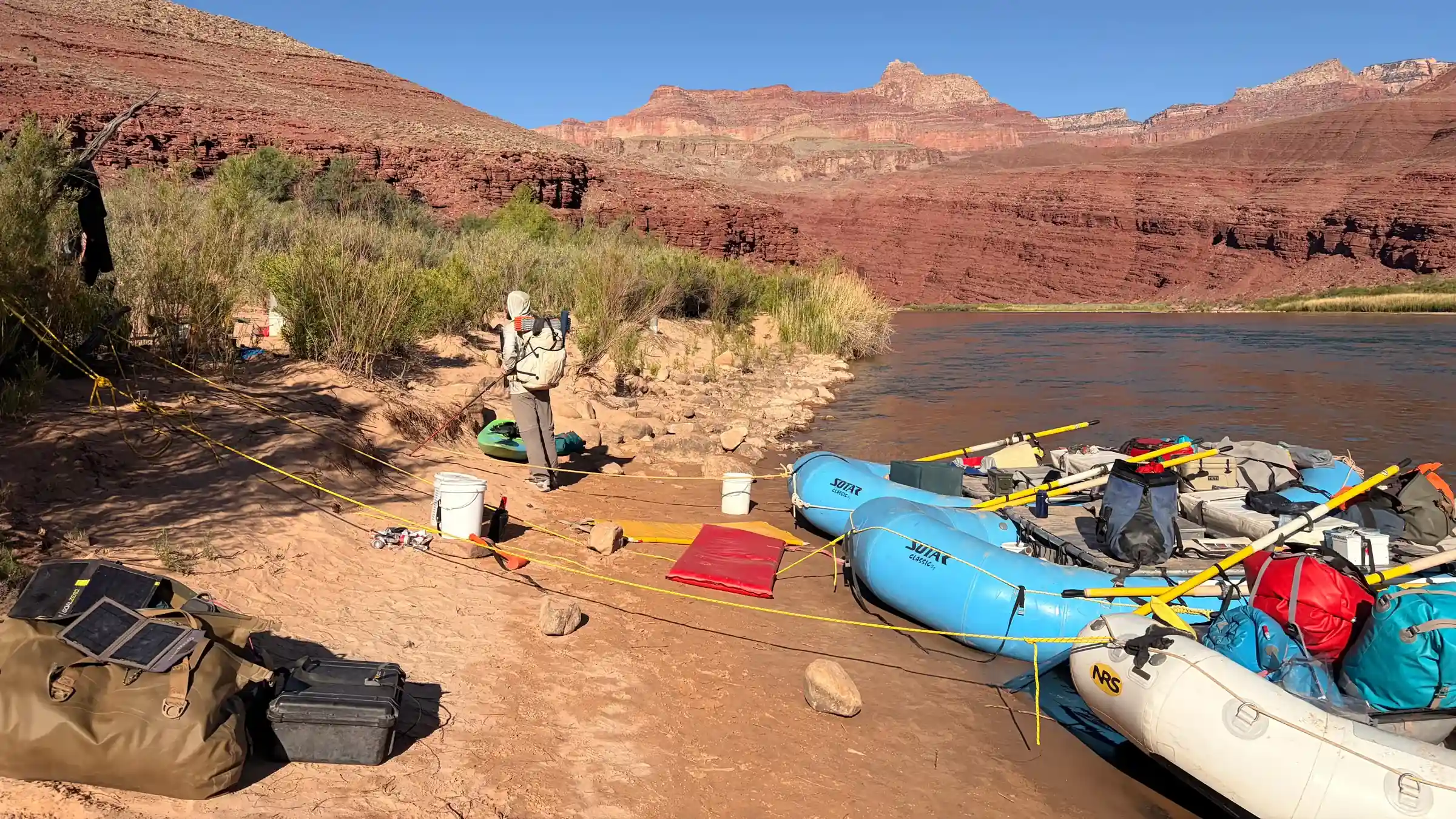
After 16 days of running some of the biggest whitewater in North America, camping on sandy beaches beneath thousand-foot canyon walls, and living almost entirely off an 18-foot raft, I came home with a much better sense of what actually earned its place.
Here’s everything I wish I’d known about packing for a Grand Canyon river trip before I pushed off from Lees Ferry.
Editor’s Note: This guide is based on a self-supported 16-day Grand Canyon rafting trip in May. We were on a private eight-person trip with an outfitter that provided boats, rigging, kitchen gear, and food. Everything else was our responsibility to pack. Guide-supported trips, however, may provide gear such as PFDs, helmets, sleeping pads, tents, and other camp equipment.
How to Organize Your Gear for a Multi-Week River Trip
The biggest packing lesson I learned had nothing to do with the gear itself. It was how I organized it.
Pack by when you’ll use something, not what it is.
Every day follows the same rhythm: river, camp, sleep, repeat. Once I started thinking that way, everything became easier. My river clothes lived together. My camp clothes had their own dry bag. My sleeping gear never mixed with my day gear, and my toiletries and electronics each had a dedicated home. That meant I wasn’t digging through my sleeping bag every time I needed sunscreen or exposing my dry clothes to sand just to grab a clean pair of socks.
I used aWatershed Colorado Dry Bagfor my sleeping gear, aSea to Summit Big River Dry Backpack 75Lfor clothing, and aBasecamp WP Duffelto haul everything to and from the river. Packing cubes kept my clothes organized, while a mesh laundry bag kept wet, sandy gear from taking over everything else.
One of my favorite organizational tricks was carrying a small day dry bag that became my river “purse.” It held the things I reached for constantly, including my toothbrush, toothpaste, brush, medications, sunscreen, and lip balm, so I never had to open my main bags during the day.
For day hikes, I also carried a hip pack big enough for my phone, sunscreen, water, and, occasionally, a well-earned river beer.
Packing Organization Essentials
• Small dry bag (2) • Packing cubes • Dirty laundry mesh bag • Ziploc bags (5–10 assorted) • Daypack/hip pack for hiking • Large dry bag (2)
Essential River Trip Safety Gear
Most of your packing list is about comfort. This isn’t.
Your safety gear should fit well, be comfortable enough to wear all day, and always be within reach. I wore myAstral Layla PFDevery minute I was on the water, with a whistle attached at all times. I also recommend carrying a river-rescue knife, like theNRS PilotorCo-Pilot,on your PFD so you can reach it immediately. I chose bright red for both my PFD and helmet because they’re easier to spot in the water.
I used the Sweet ProtectionWanderer II Helmetfor bigger rapids and technical sections, such as Bedrock and Lava Falls. Head protection isn’t just about hitting the water. In a flip or swim, there are rocks, rafts, oars, and loose gear to think about, too.
Finally, keep your emergency essentials organized and protected. I stored my ID, insurance card, medications, and first-aid items in aMatador Waterproof Pill CanisterandMatador FlatPak Dry Bag, so I always knew exactly where they were.
Pro Tip:A whistle or rescueknifeonly works if you can reach it. Attach both directly to your PFD instead of tossing them in a dry bag.
What to Pack
• PFD • Helmet • Whistle • River knife • multitool • ID, credit card, insurance card, cash • Personal medications • Advil or ibuprofen • Electrolytes • Band-aids • Blister care • Anti-chafe balm • Tweezers • Nail clippers + file
The Best Clothing for a Multi-Week River Trip
River clothes have one job: to keep you comfortable when they’re wet.
They’re going to get soaked in rapids, covered in sand, caked in sunscreen, and worn day after day. Don’t pack for variety. Pack for sun protection, quick-drying fabrics, and pieces you’ll actually want to wear over and over again.
The biggest surprise for me was merino wool. I wore theRidge Merino Solstice Lightweight Wool Hoodie,Ridge Merino Wool Bralette,Branwyn Essential BraletteandThong, andSmartwool Second Cut Hike Socksalmost every day. The hoodie protected my arms and neck from the relentless sun, while the socks kept my feet comfortable in sandals and protected them from both the sun and the scorching sand. Merino naturally regulates body temperature, stays comfortable when damp, resists odor, and holds up beautifully through more than two weeks of repeated wear without laundry.
I also packed a synthetic option, thePatagonia Swiftcurrent Sun Hoody, which dried a little faster and felt cooler during the hottest parts of the day thanks to its looser fit. It’s worth having at least one synthetic layer in the rotation.
For bottoms, I alternated between theVuori Villa ShortsandHalfdays Bastille Trail Pant. I packed the pants primarily for hiking, but ended up wearing them on the raft just as often because they offered excellent sun protection without feeling too warm. If you prefer a convertible option, theCotopaxi Losdos Zip-Off Pantsare another great choice.
I packed twoMAI Swimtwo-piece swimsuits and alternated between them for the entire trip. They dried quickly, made bathroom breaks much easier than a one-piece, and let me mix and match tops and bottoms if one was still damp. I often wore just the bikini top under my sun hoodie like a sports bra, then changed into a dry suit the next morning. For men, the same principle applies. Pack two or three pairs of quick-drying shorts or hybrid board shorts, like theFlylow Hot Tub Short, that are comfortable enough to wear on the raft and around camp.
And yes, pack rain gear, even for a desert river trip. Afternoon thunderstorms can roll in with little warning, and myPatagonia Torrentshell 3L JacketandTorrentshell 3L Pantsproved just as valuable for wind and splash as for rain. They worked well as splash gear through smaller rapids. The Colorado River stays around 47 degrees Fahrenheit year-round, so even on a 100-degree afternoon, getting repeatedly soaked can chill you faster than you’d expect. If you’re boating in colder conditions or want to stay completely dry, you’ll want a true dry suit with sealed wrist, neck, and ankle gaskets.
Finally, don’t overthink your hat or sunglasses, but do bring backups of both. Sooner or later, the wind will steal a hat, or someone will step on a pair of sunglasses.Chumsand a simple hat clip are cheap insurance.
Pro Tip:Skip cotton on the river. Save it for camp. Lightweight merino and synthetic fabrics will keep you more comfortable, protect you from the sun, and dry quickly enough to wear again the next morning.
• Sun hoodie (2) • Quick-dry T-shirt (2) • Quick-dry shorts (2) • Quick-dry pants (2) • Two-piece swimsuit (2) • Rain jacket • Rain pants • Sun hat • Trucker hat • Hat clip • Chums • Sunglasses with a strap (2)
What to Wear Around Camp
After a full day on the river, changing into dry clothes became one of my favorite rituals. Unlike my river clothes, my camp clothes didn’t need to perform as much. I wanted them to be soft, breathable, and comfortable. This is one place where cotton is perfectly acceptable, even preferable. My favorite camp shirt wasn’t technical at all. It was an old oversized cotton T-shirt from a thrift store.
MyVuori Villa Shorts,Ripton Cut-Off Bike Jorts,Ibex merino T-shirts, andPatagonia Capilene Cool Trail Cropped Shirtbecame easy camp staples. On a rare cool evening, I reached for a 100 percent merinoIcebreaker sweater, which quite literally saved the night after I got soaked to the bone at the House Rock rapid. MyPatagonia Micro Puff Hoodyadded even more warmth without taking up much room in my dry bag.
Pro Tip:River trips have a long tradition of themed nights and camp celebrations, and I quickly learned one thing: however many costumes you think you’ll need, pack one more. Hit your local thrift store and get weird.
• Sports bra(2) • Wool socks (2) • Shorts (2) • Pants (1) • T-shirt (4) • Dress (2) • Down, puffy jacket • Wool sweater • Wool socks (2) • Underwear (daily) • Costumes
The Best Shoes for a River Trip
I thought bringing three pairs of shoes sounded excessive, but each pair served a completely different purpose. MyChaco Z/1 Classicslived on my feet during the day, handling everything from rowing to scrambling over slick rocks. As soon as we made camp, I switched intoChaco Chillos Slides, which let my feet dry out while still protecting them from rocks, sticks, critters, and scorching sand.
For side hikes to places like Elves Chasm or the Nankoweap Granaries, I packed theTeva Hydratrek Closed-Toe Water Sandal, and they earned their place. The added toe protection and grippy outsole inspired much more confidence on rocky trails and when scrambling through side canyons than open-toe sandals did. I even wore them on the raft some days to give the tops of my feet a break from the relentless desert sun.
Pro Tip: Whatever you wear on the river, make sure it stays securely attached to your feet. Flip-flops don’t stand a chance.
• River shoes • Camp sandals • Hiking shoes
The Best Sleeping Setup for a River Trip
Most nights on a river trip, you’ll be so exhausted you could probably fall asleep anywhere. But good sleep still matters. Unlike backpacking, weight isn’t the limiting factor, so this is one place where comfort is absolutely worth the extra space.
Every evening, I’d build the same setup: anNRS Snooze Padon aHelinox Cot One Convertible L, topped with a fitted twin sheet, sleeping bag, andSea to Summit Aeros Premium Pillow. The fitted sheet was one of the smartest things I packed because on warm nights I could sleep on top of my sleeping bag instead of directly on the plastic sleeping pad.
I also put aCGear Sand-Free Multimatbeneath my cot, and I’m convinced it’s some kind of magic voodoo. Its dual-weave mesh lets sand fall through but somehow keeps it from coming back up, creating a clean place to get dressed, organize my gear, and climb into bed without covering everything in sand.
I only slept in my tent once, during a night of high winds and blowing sand. The rest of the trip, I slept under the stars, usually falling asleep watching the Big Dipper slowly wheel across the sky. I was still glad to have my tent for bad weather, extra privacy, or if bats swooping through camp at Lower Bass aren’t your idea of a relaxing night’s sleep.
The two smallest items that made the biggest difference? AnAlbatross Sleep Eye MaskandMack’s Ultra Soft Foam Earplugs. The sun rises early in the canyon, the birds start chirping even earlier, and someone is almost always snoring nearby
• Cot • Sleeping bag (30–40 degrees Fahrenheit) • Sleeping bag liner or flat sheet • Sleeping pad that can get wet • Pillow • Fitted sheet (twin) • Tent (footprint + rainfly) • Sand tarp • Eye mask • Ear plugs
River Trip Toiletries Worth Packing
You’re going to be dirty. That’s part of the experience. But a few well-chosen toiletries can make a huge difference after two weeks of sun, sand, sunscreen, and river water.
The MVP of my toiletry bag wasFirst Aid Beauty Ultra Repair Cream. Between the dry desert air, constant sunscreen, and hours in the sun, my skin needed all the help it could get. I also usedTrader Joe’s Daily Facial Sunscreen SPF 40every morning andSun Bum Original SPF 30 Lotioneverywhere else. I went through far more sunscreen than I expected, so whatever you think you’ll need, double it. The same goes for lip balm. I keptPalmer’s Cocoa Butter Stickin my PDF pocket constantly.
Bathing was intentionally simple. I packedSea to Summit Trek & Travel Shampoo and Conditioner,Dr. Bronner’s, a silicone loofah, body wipes, and a quick-dry towel. I never felt spotless, but I felt human again.
One luxury I’d absolutely bring again?Shea butter foot masks.After days of abuse from sun and sand, they felt ridiculously indulgent in the best possible way.
If you menstruate, I foundFlex period discsespecially practical because they eliminate the need to pack out used tampons or pads. I also packed medication for UTIs and yeast infections. Thankfully, I never needed it, but on a remote trip, I’d rather carry it than wish I had it.
Pro Tip:Pack twice as much sunscreen, lotion, and lip balm as you think you’ll need. The combination of high-desert sun, reflected UV off the water, and dry canyon air is brutal on your skin.
• Toothbrush and toothpaste • Floss • Deodorant • River safe soap • Brush • Hair ties • Face + body wipes • Body wipes • Quick-dry towel • Sunscreen • Lip balm • Lotion • Aloe or other after sun • Period supplies • UTI and yeast infection meds
The Best Tech for a Multi-Week River Trip
One of the best parts of a river trip is unplugging, but you’ll still want a way to keep your phone, camera, headlamp, satellite communicator, and a few camp comforts charged.
Power becomes its own little ecosystem. Once you’re on the river, sunshine is your only outlet.
Our setup centered around theGoal Zero Yeti 300 Power StationandGoal Zero Nomad 100 Solar Panel. We’d use the solar panel to charge the Yeti and an Anker power bank, then rely on those stored batteries to top off phones, cameras, headlamps, and myGarmin inReach Mini 3 Plusthroughout the trip. It was a simple system that meant we never worried about running out of power.
I also brought two Bluetooth speakers. TheTurtlebox Grandestayed lashed to the boat, while the smallerTurtlebox Rangermoved easily between boats and the beach. Keep the volume respectful. One of the best parts of a river trip is the quiet, and your soundtrack shouldn’t become everyone else’s.
Pro Tip: Set your solar panel out as soon as you wake up. Morning is your best opportunity to collect a full day’s worth of power before the canyon walls steal the afternoon sun.
• Solar charging panel • Goal Zero battery • Smallpower bank+ charging cables • Waterproof phone case • Bluetooth speaker • Headlamp • Headlamp batteries (extra set) • String lights or camp light
The Small River Trip Essentials That Made the Biggest Difference
Some of my favorite things I packed weren’t the biggest or the most expensive. They were the little items that quietly made life on the river easier, more comfortable, or simply more fun.
Sarongs
If I had to pick one unexpected MVP, it would be thesarong. I packed two old, well-loved ones and used them constantly. They became towels, changing wraps, skirts, picnic blankets, pillow covers, and even a little extra shade when none was to be found. On 100-degree days, I’d dunk one in the river and drape it over my shoulders or legs for instant relief.
Water Bottle & Camp Mug
I carried twoNalgene Wide Mouthbottles daily. Unlike insulated bottles, you can drag a plastic water bottle behind the raft in the river to cool the water inside. MyYeti Ramblerhandled everything else, from morning coffee to evening cocktails.
Camp Chair
I admittedly brought the wrongcamp chairon my trip. My lightweight backpacking chair (which I normally love) had to be assembled every evening and would blow over whenever the wind picked up. Next time, I’m bringing the biggest, sturdiest folding camp chair I can strap to the raft, preferably one with armrests and a cup holder. If you want to splurge, theKelty Deluxe Lounge Chairis built for exactly this kind of camping. If you don’t, aColeman Cooler Quad Chairis comfortable, durable, and costs a fraction of the price.
String Lights
Every evening, someone would hang theBioLite Solar String Lightsaround camp while dinner was cooking. Add aBioLite Alpenglow 250,and camp vibes will be strong. Were they necessary? Not even a little. But the vibes were immaculate, and remember, this is all supposed to be fun.
Locking Carabiners
I brought eight locking carabiners and still could have used more. They clipped dry bags together, secured water bottles, hung lights, and somehow always found another job. Stick with locking models. They’re more secure and, unlike open-gate carabiners, much less likely to snag gear or pose a hazard if a raft flips.
Enterainment
Bring something that lets you slow down. For me, it was a journal and a small watercolor kit. You’ll take plenty of photos, but you’ll appreciate having another way to remember the trip, too. For someone else, it might be a novel, a deck of cards, or a horseshoe.
• Camp chair • Sarong (2) • String lights • Locking carabiners (8) • Lighter • Plastic water bottle (2) • Insulated mug/coffee cup • Book • Journal • Pens • Cards and games • Art supplies
What I’d Pack Less Of
One of the biggest surprises wasn’t what I forgot. It was how little I actually needed.
Life on the river is wonderfully simple. You wear the same handful of clothes, settle into a routine, and stop caring about outfits repeating immediately. If I packed for another 16-day trip tomorrow, I’d bring fewer clothes. Two sets of river clothes and two sets of camp clothes would have been plenty, even for a multi-week expedition.
I didn’t use myHelly Hansen neoprene leggingson this trip, so I wouldn’t pack them again for a warm-weather Grand Canyon expedition. But if I were rafting in the spring, fall, or on a colder river, they’d be one of the first things I’d throw in my dry bag.
What I’ll Pack Next Time
The first thing I’d grab? More sunscreen and more lotion.If you think you’ve packed enough, you haven’t. Pack another bottle of each. Between the desert sun, reflected UV off the water, and the dry canyon air, I went through both at an almost comical pace. I honestly don’t think it’s possible to have too much.
For all the time I spent researching this packing list, there are still a few things I’d add before my next expedition.
A river rescue knife like theNRS Pilotis at the top of my list.It’s one of those things you hope you never need, but we had a very real emergency when a raft became high-centered on a hidden rock and a kayaker became entangled in a rope. Someone had to cut the line immediately, and thankfully, he had his knife readily available on his PFD. Watching that unfold made me realize I want one on me, not somewhere else on the boat.
My fitted sheet was one of the best things I packed, but next time I’ll adda lightweight flat cotton sheet, too. There were plenty of warm nights when I wanted something lighter than my sleeping bag but more substantial than sleeping totally exposed.
I’d also pack more electrolytes.I underestimated how much I’d use in the dry desert air and found myself reaching for them almost every day.
The Bottom Line
I spent weeks trying to build the perfect packing list before this trip. The truth is, there probably isn’t one.
Every river, every season, and every group is a little different. What worked for me on a 16-day Grand Canyon expedition will evolve before my next trip, just as yours will after your first.
But after more than two weeks living out of an 18-foot rubber raft, this was my main takeaway: As long as you are safe and reasonably comfortable, you quickly stop thinking about what you packed. You’re too busy watching the canyon walls glow at sunset, swimming in side canyons, laughing around camp, and realizing how little you actually need to feel completely content on the greatest adventure of your life.
READER NOTES